THE MALDIVES’ LAST GREAT PLACE

About

Here, more uninhabited islands await than anywhere else in the Maldives, preserving a raw wilderness that time nearly forgot.

As you journey through this remote paradise, every dive or stargazing moment directly supports reef conservation and local communities.

Whether swimming with tiger sharks, wandering ancient island paths, or simply gazing at pristine night skies, visitors become part of a living story—one where travel is truly transformative, regenerative, and meaningful.

This is Huvadhu Atoll: where the adventure begins, and nature writes the script.
Location

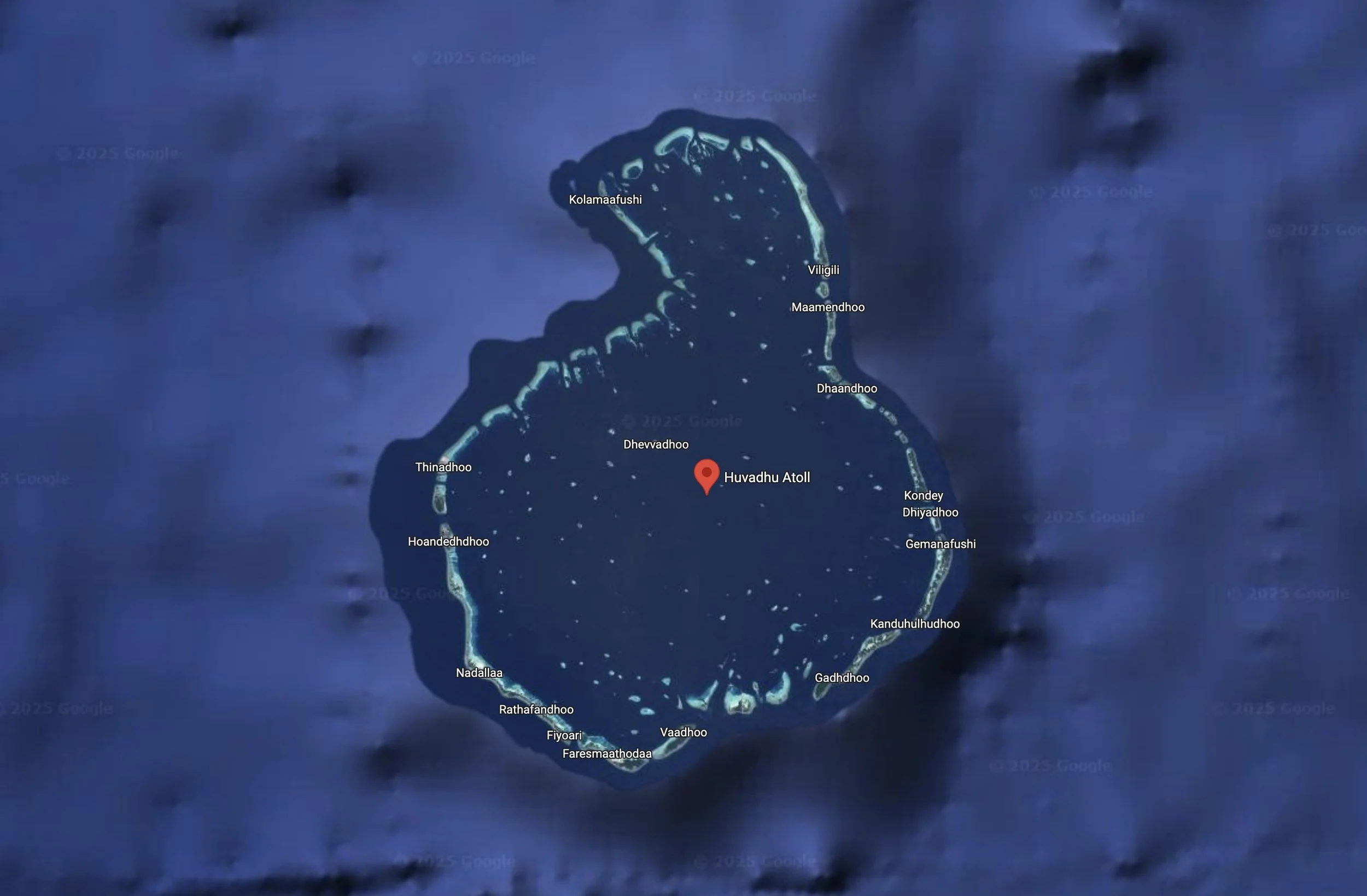
Stretching across over 3,200 square kilometers, Huvadhu Atoll is one of the world’s largest and least-developed natural atolls, home to extraordinary biodiversity and the country’s deepest lagoons.
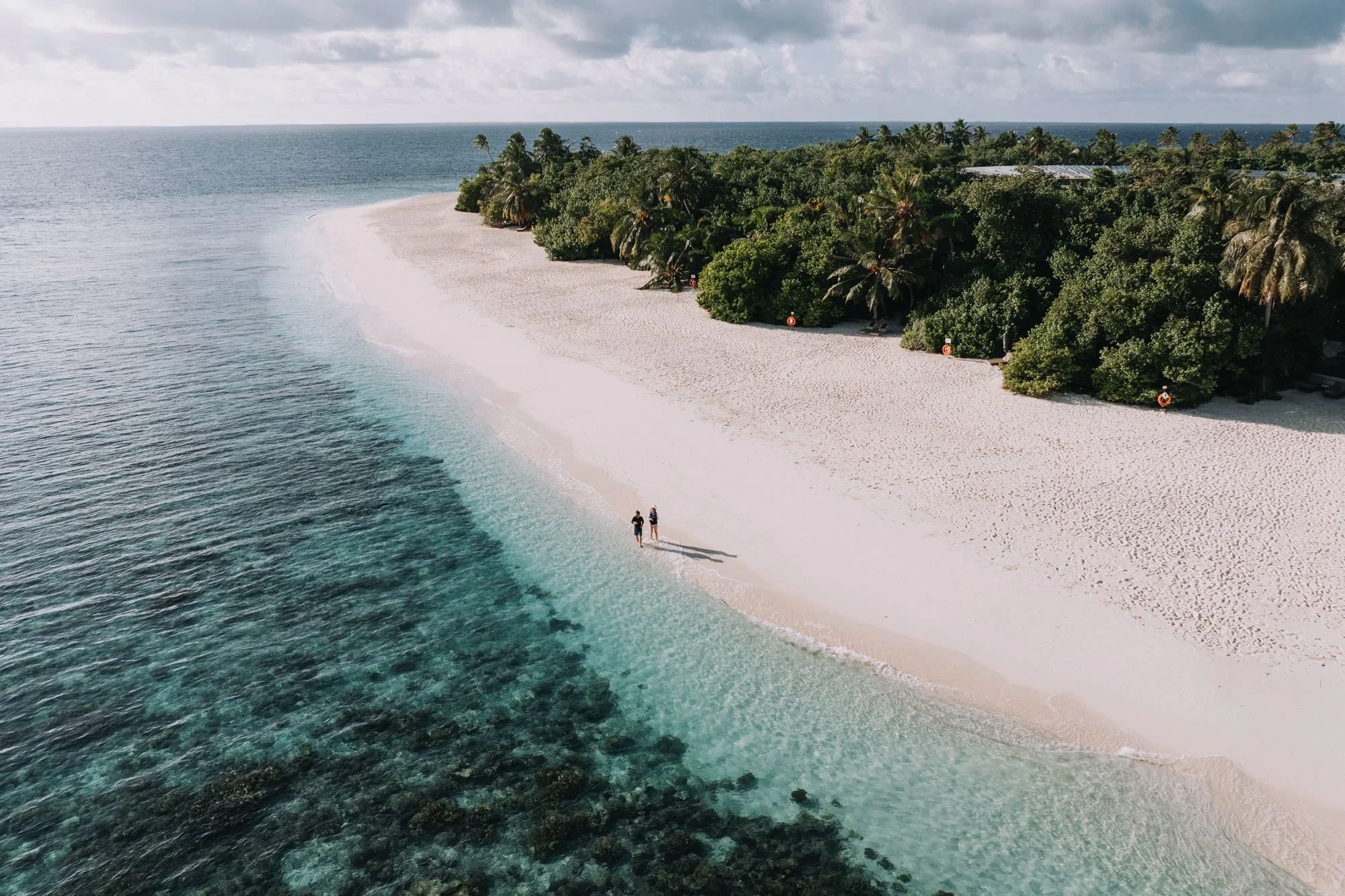
Aerial view of a tropical beach with white sand, clear ocean water, and lush green trees with wind turbines in the background. Two people are walking along the shoreline.
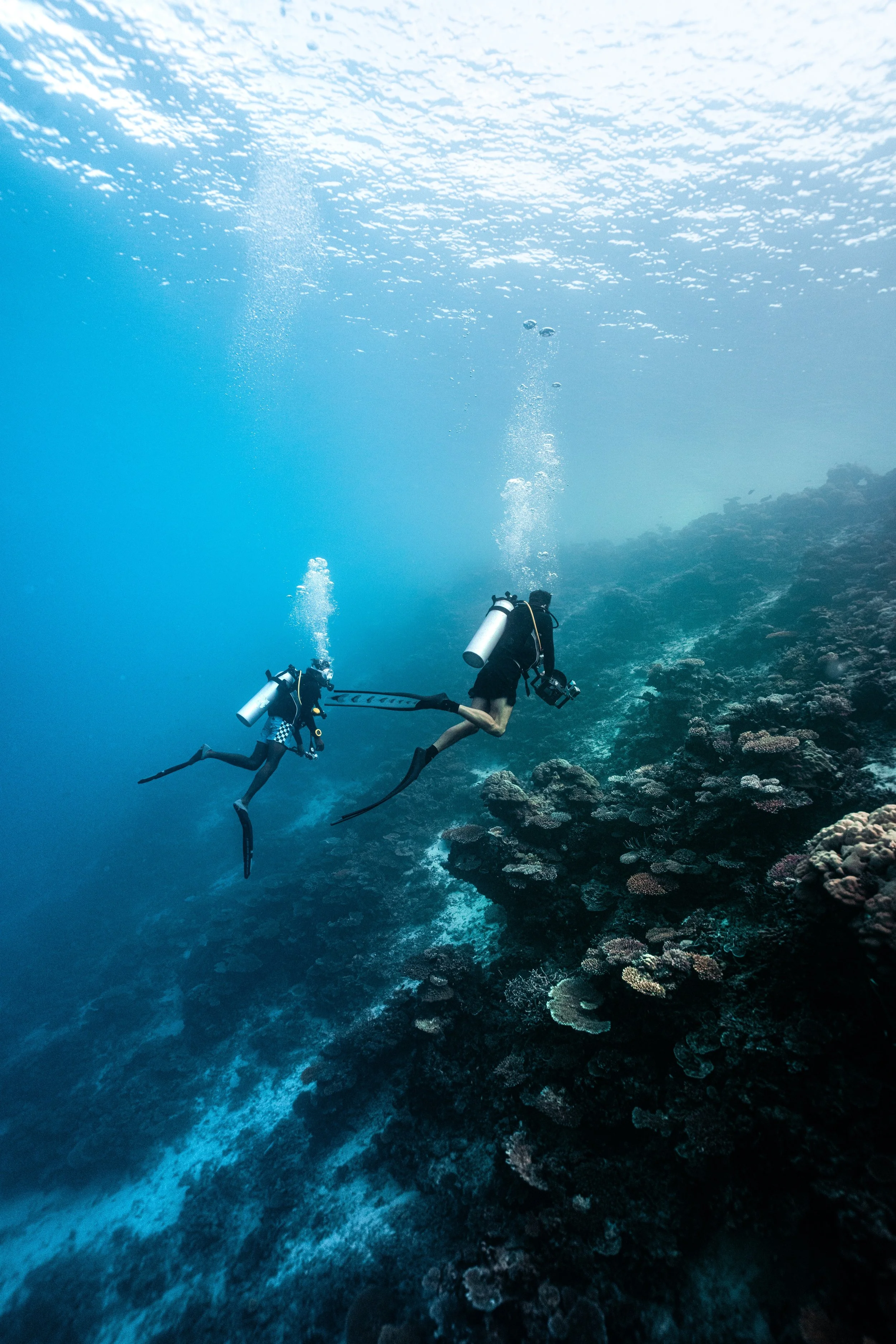
Two scuba divers exploring a coral reef underwater.
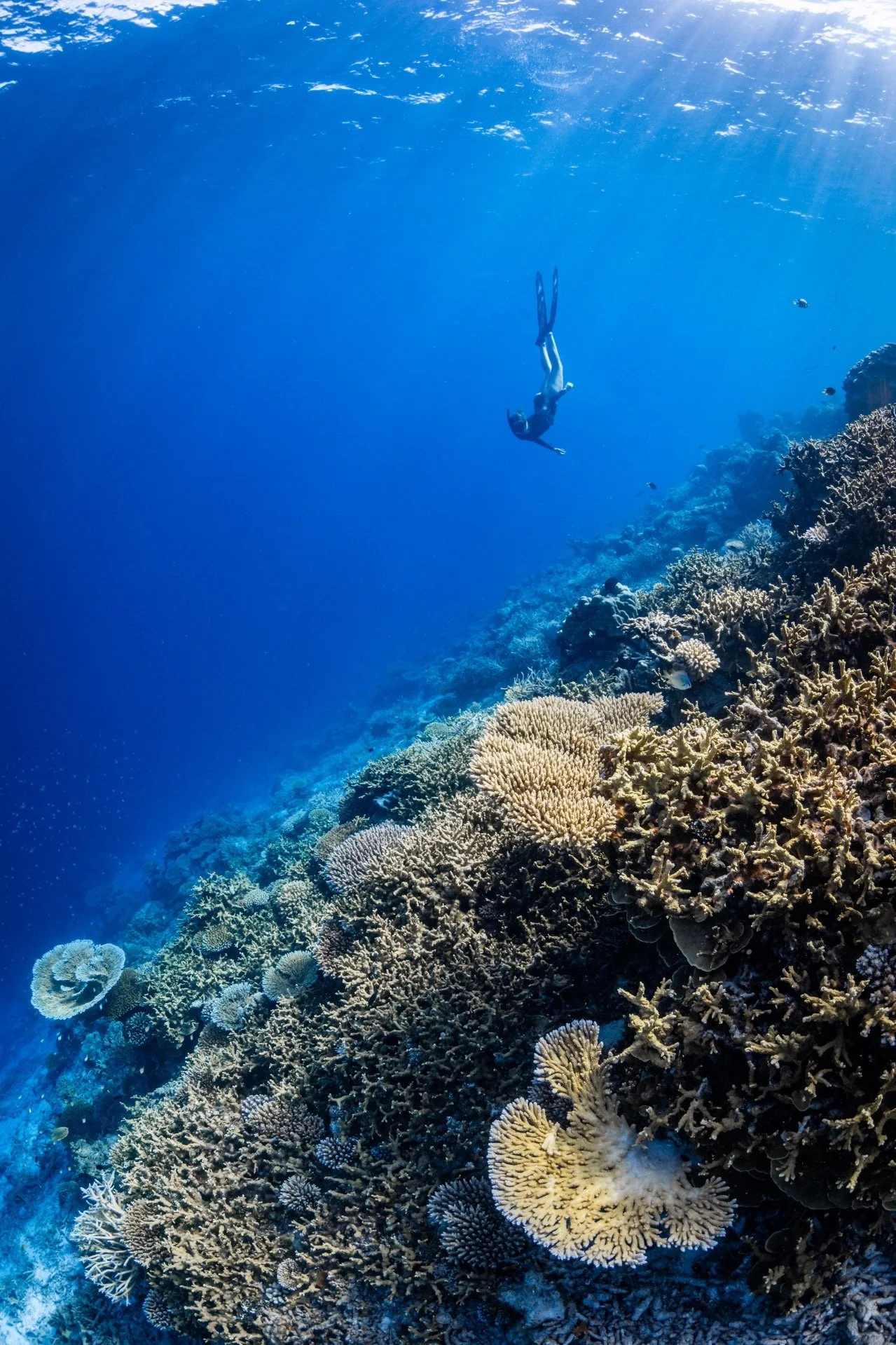
A diver swimming above a vibrant coral reef underwater.
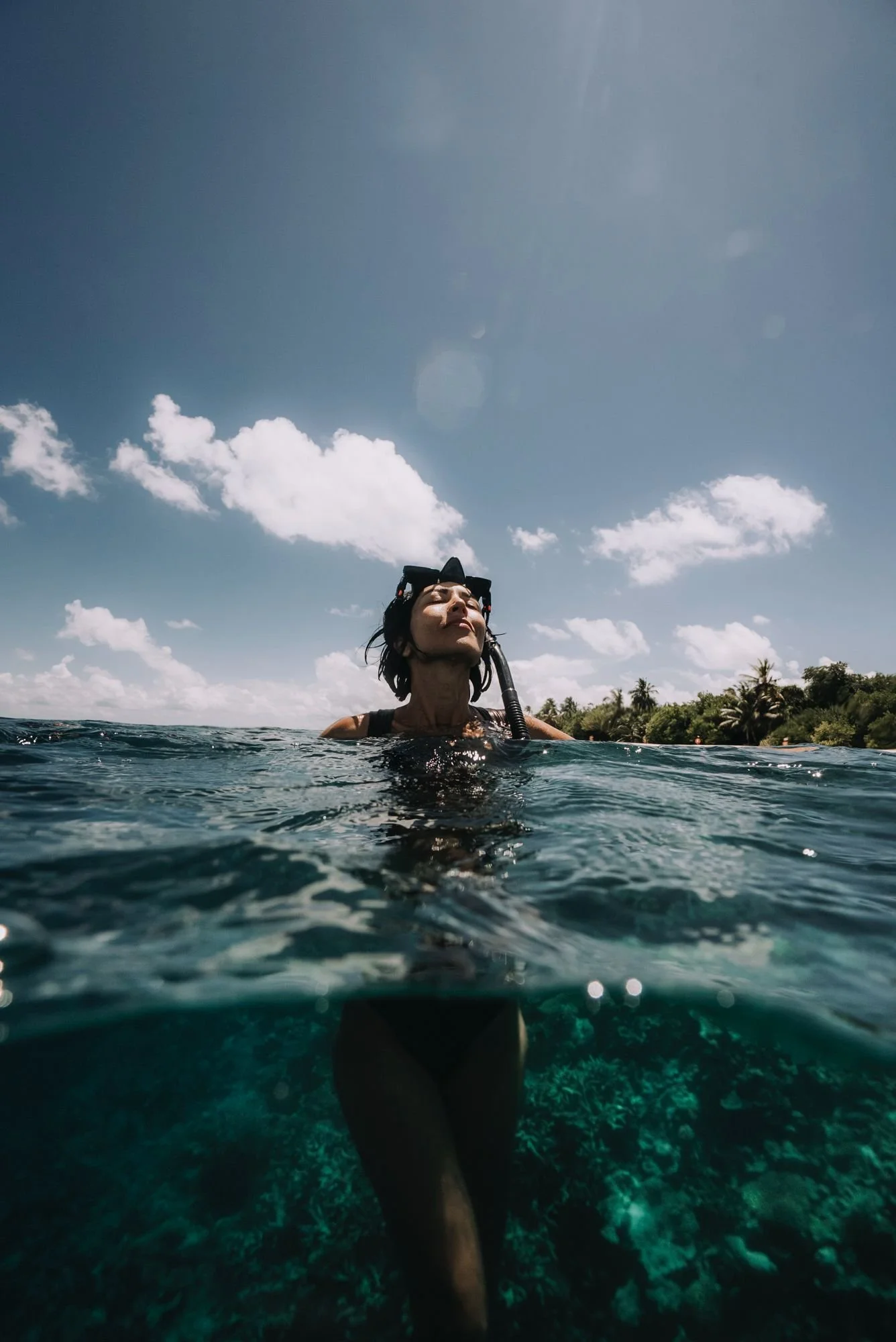
Woman snorkeling in the ocean with her eyes closed, wearing a snorkel and mask, under a partly cloudy sky, with a tropical shoreline in the background.
A diver swimming above a vibrant coral reef underwater.
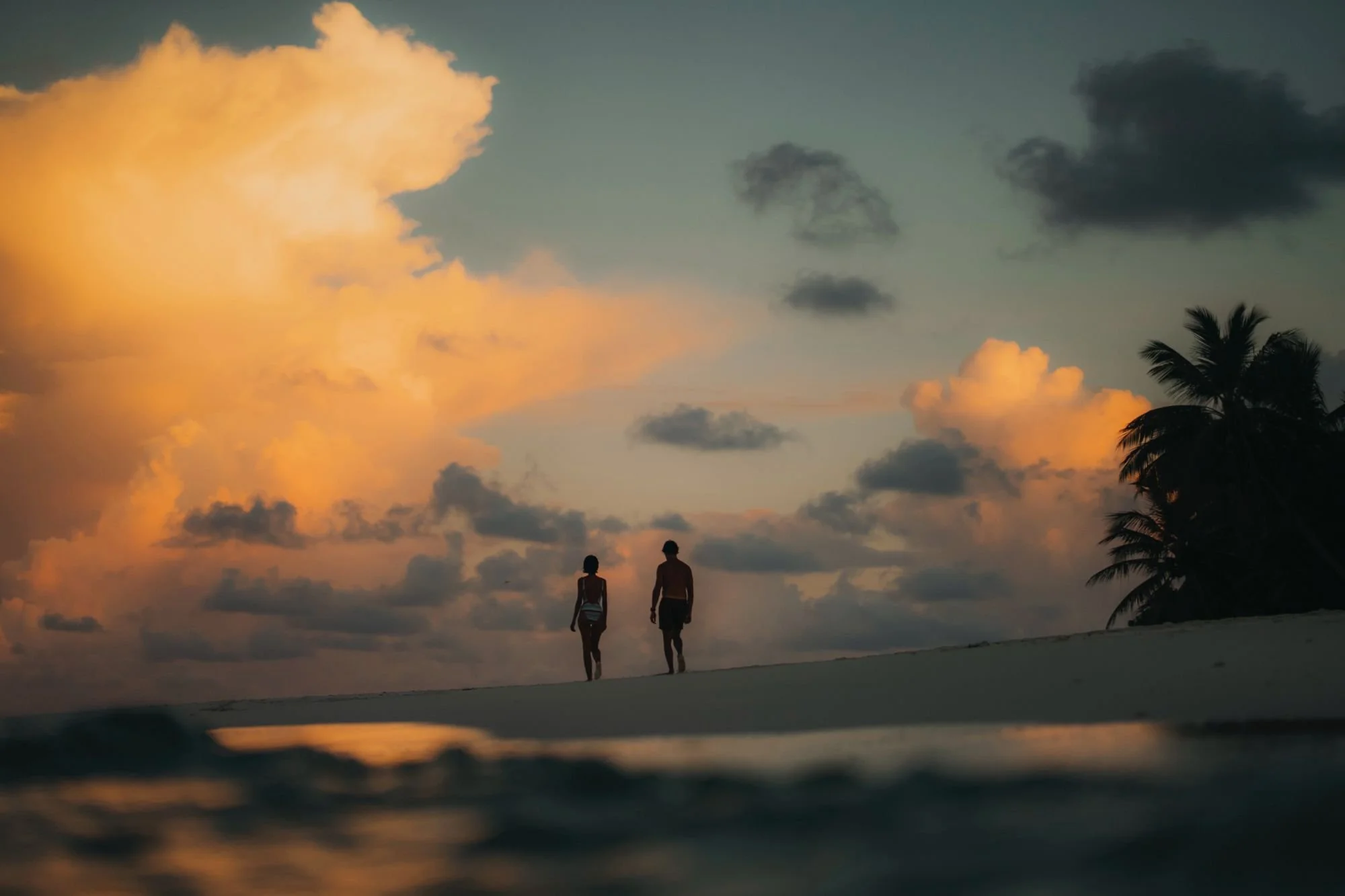
Silhouettes of a man and woman walking on the beach at sunset, with palm trees and clouds in the sky.

Where Adventure Thrives

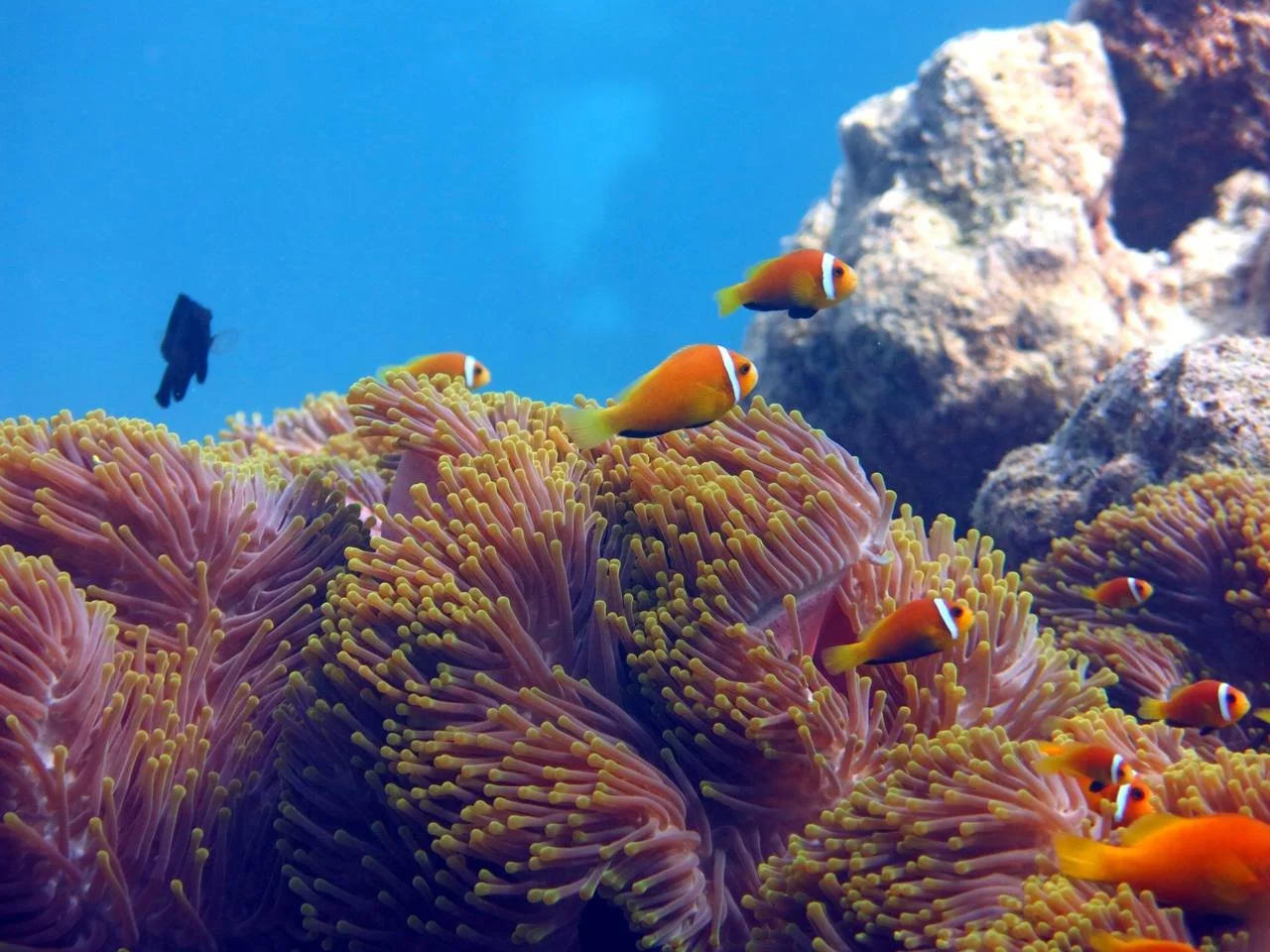
Colorful clownfish swimming among pink and yellow sea anemones with rocks in the background.
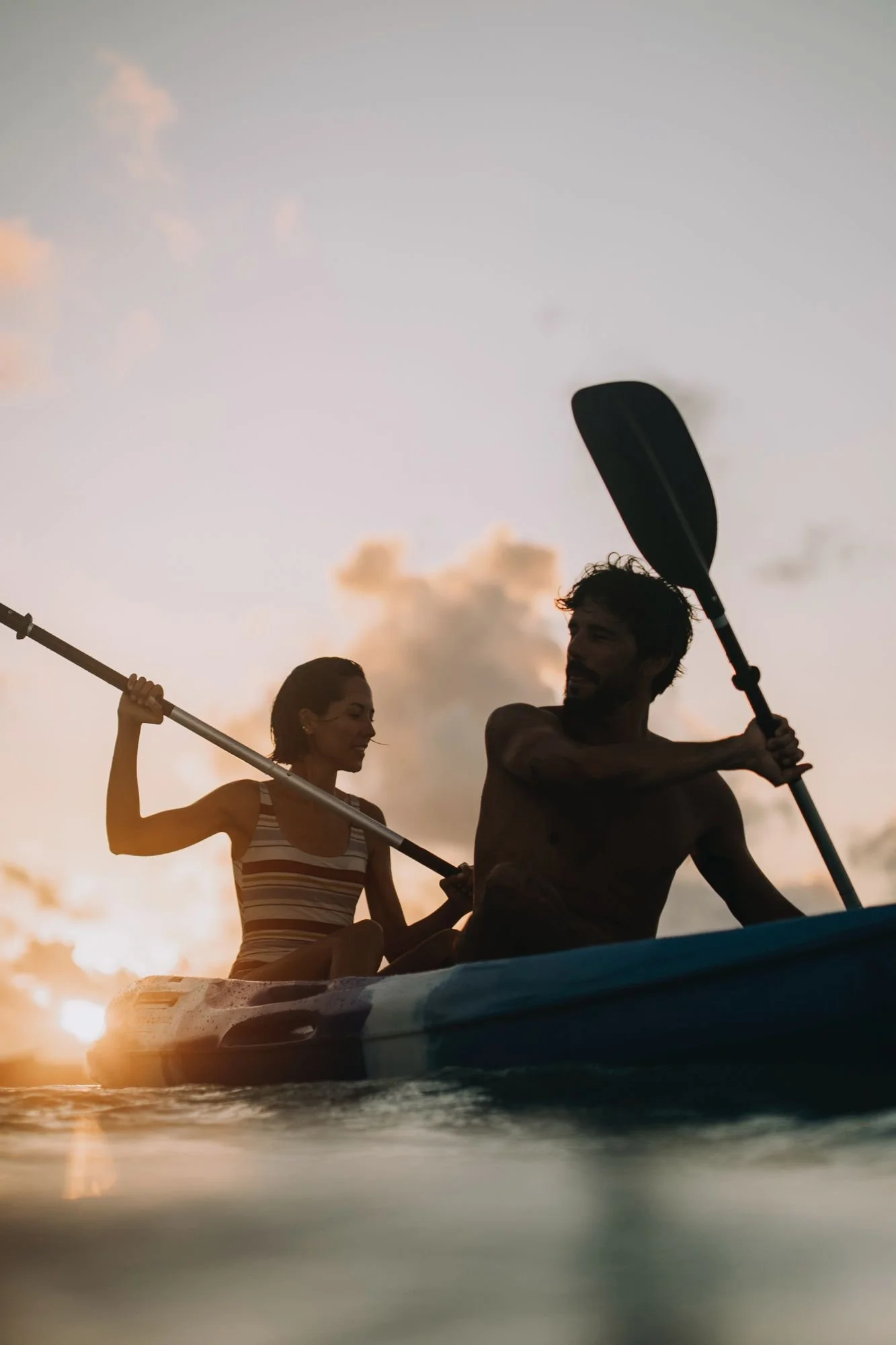
A silhouettes of a man and woman kayaking on the water during sunset or sunrise, with clouds in the sky.
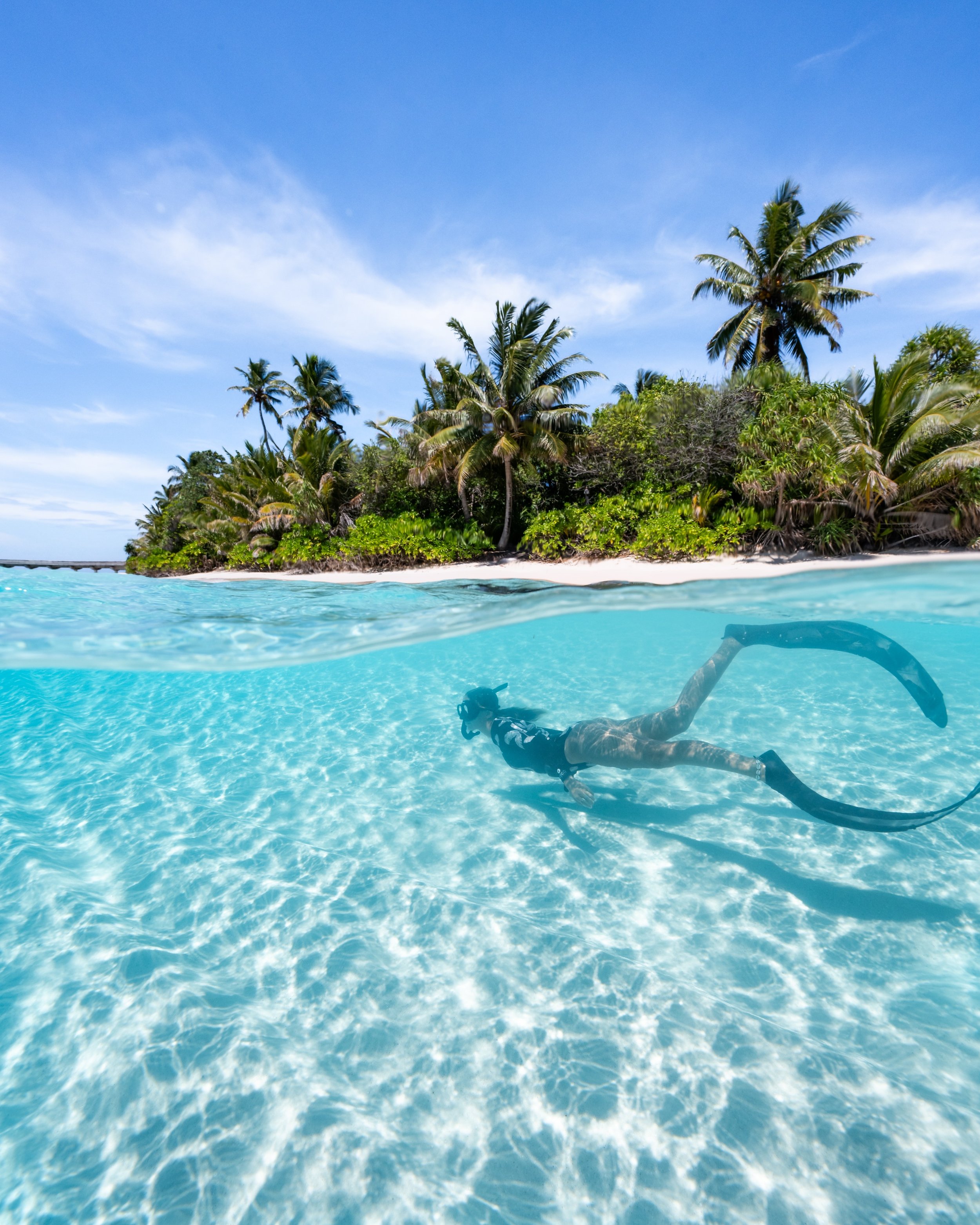
A person snorkeling underwater in clear blue water near a tropical island with palm trees and a bright sky.

Vibrant marine life await in crystal-clear waters where divers often find themselves completely alone with nature, far from the noise of the northern atolls.Start with our stories: when to come, what you will see under the water, and how to plan the journey south.

Diving and Snorkeling in Huvadhu Atoll is a wild adventure, untouched by crowds or resort sprawl. With 255 islands, many fringed with thriving coral reefs waiting to be explored, you’re immersed in a world of natural beauty and biodiversity.
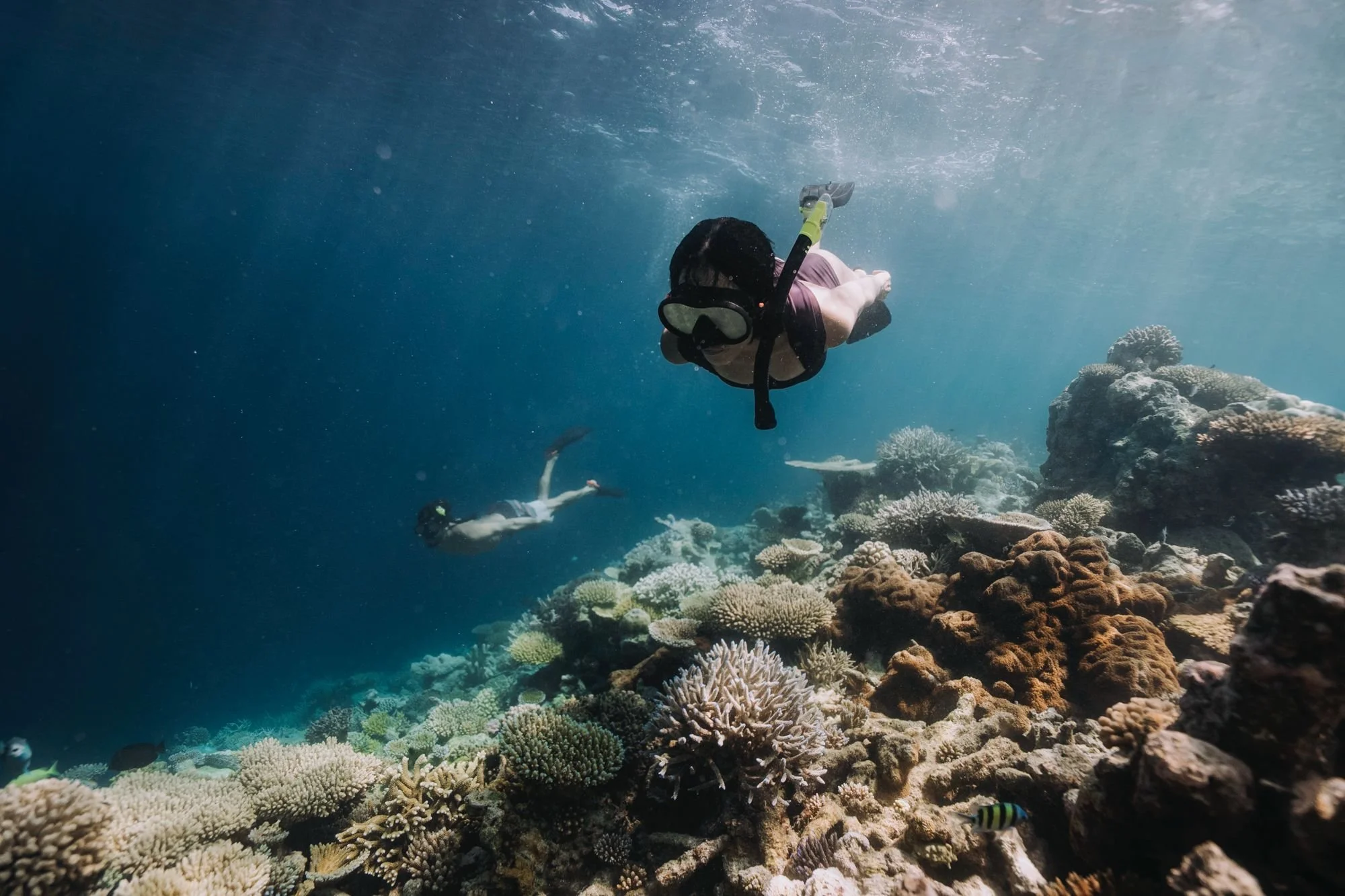
Two people snorkeling underwater over a coral reef with colorful rocks and marine life.

Frequently asked

Before you go.

The practical side of the Maldives’ last great place, answered plainly.

How do I get to Huvadhu Atoll? +
Fly to Malé (Velana International Airport), then take a Maldivian domestic flight of about an hour south to Kooddoo in the north of the atoll or Kaadedhdhoo in the south. A speedboat carries you the last 10 to 30 minutes to your island. Resorts and guesthouses arrange the whole transfer when you book, or you can book flights yourself at maldivian.aero. See Getting Here for the full journey.
When is the best time to visit? +
December to April is the dry season, with the calmest seas and the clearest water. May to November brings plankton-rich currents that draw feeding manta rays, and whale sharks pass through all year. There is no wrong season: dive the eastern side early in the year, the western side later, and visibility holds in both.
Where can I stay in Huvadhu Atoll? +
Park Hyatt Maldives Hadahaa, the atoll’s flagship resort, sits on its own island in the north. Across the atoll, family-run guesthouses and surf lodges on the local islands offer a closer view of Maldivian life. Both airports connect to both kinds of stay.
What makes Huvadhu different from other Maldives atolls? +
Huvadhu is one of the largest and least developed natural atolls on Earth, with hundreds of islands, the country’s deepest lagoons and only a handful of resorts. It is the Maldives before mass tourism: empty channels, pristine reefs, and islands that still feel undiscovered.
What marine life will I see? +
Whale sharks cross the atoll year-round and manta rays gather to feed from May to October. Sea turtles crowd the shallow reefs, rays hunt the tidal lagoons, and the channel dives bring sharks in numbers. Fuvahmulah, famous for its tiger sharks, is a short hop further south. Start with the diving guide.
Do I need to be an experienced diver? +
No. The channel dives run with current and suit experienced divers, but the lagoon reefs and house reefs are calm, shallow and rich. Snorkellers see turtles, rays and coral gardens without a tank, and freedivers come for the deepest lagoon in the Maldives. See the snorkelling guide.